One Day In Lyon
Whilst exploring everything in Lyon in one day is ambitious, careful planning allows you to experience the French city’s essential highlights, from Renaissance architecture to world-class gastronomy, at a brisk pace.

Recently updated on October 22nd, 2025 à 09:48 pm
Can You Explore Everything in Lyon in One Day?
Right, let’s be honest here, mate – exploring everything Lyon has to offer in just one day? That’s a bit of a tall order, I’m afraid. This brilliant French city deserves at least two or three days to properly savour its Renaissance architecture, world-class gastronomy, and charming traboules. However, with careful planning and a brisk pace, you can absolutely experience Lyon’s essential highlights in a single day. I’ve crafted this itinerary after several visits myself, focusing on the must-see spots whilst keeping travel time between locations minimal. It’s doable, but you’ll need your walking shoes on!
Table of Contents
About This Itinerary for One Day in Lyon
This carefully crafted itinerary maximizes your time in Lyon, focusing on the city’s most iconic attractions while maintaining a comfortable pace. We’ve designed this route to minimize travel time between sites, allowing you to experience Lyon’s UNESCO-listed old town, its Renaissance architecture, and world-renowned gastronomy without feeling rushed.
The itinerary prioritizes walkability, with most attractions clustered in Vieux Lyon and Presqu’île, connected by a scenic funicular ride. You’ll discover Roman ruins, hidden traboules, and stunning viewpoints, all while sampling authentic Lyonnaise cuisine. This plan works year-round, though summer offers longer daylight hours for evening exploration. We’ve included time buffers and alternative options, so you can adapt based on your interests—whether that’s spending extra time in museums or lingering over a leisurely lunch at a traditional bouchon.
One Day in Lyon: Itinerary – In a Nutshell
If you’re short on time, here’s a quick overview of how to make the most of your single day in Lyon. This itinerary is designed to take you through the city’s highlights while allowing enough time to soak in the atmosphere and enjoy the renowned Lyonnaise cuisine.
Morning: Start your day in Vieux Lyon, the UNESCO-listed old town with its Renaissance architecture and famous traboules. Visit the Cathédrale Saint-Jean-Baptiste, then take the funicular up to the Basilique Notre-Dame de Fourvière for panoramic views of the city. If time permits, explore the adjacent Gallo-Roman theaters.
Lunch: Descend back to Vieux Lyon and enjoy a traditional meal at an authentic bouchon, where you can sample classic Lyonnaise dishes like quenelles, tablier de sapeur, or andouillette.
Afternoon: Cross the Saône River and stroll through the Presqu’île, Lyon’s vibrant peninsula district. Walk along Rue de la République, explore Place Bellecour (one of Europe’s largest squares), and wander through the charming streets of the Croix-Rousse neighborhood, historically known for its silk-weaving industry.
Evening: Head to the Confluence district to admire modern architecture, or return to the Presqu’île to watch the sunset along the riverbanks. Visit the Parc de la Tête d’Or if you prefer green spaces.
Dinner: End your day with another culinary experience at a different bouchon or contemporary restaurant, perhaps in the trendy Croix-Rousse area, before taking an evening stroll along the illuminated quays of the Rhône or Saône rivers.
Here are some recommendations for activities with a guide, lasting a few hours that you can explore in Lyon.
One Day in Lyon: Itinerary – In Detail
Morning
Start your day at 8:00 AM in Vieux Lyon, the Renaissance old town. Begin at Saint-Jean Cathedral, a stunning Gothic-Romanesque structure with exceptional stained glass windows and an astronomical clock that chimes at noon, 2 PM, 3 PM, and 4 PM daily. The cathedral is free to enter and opens early, giving you a peaceful start before crowds arrive.
From the cathedral, wander through the narrow cobblestone streets (traboules) that connect buildings. These covered passageways were originally used by silk workers and are unique to Lyon. Notable traboules include the one at 27 Rue du Bœuf and 54 Rue Saint-Jean—most are open to the public during daytime hours, but respect residents’ privacy.
Head to Place du Change and admire the façades of Renaissance houses with their pink and ochre tones. Continue to Rue Saint-Jean, the main artery of Vieux Lyon, lined with boutiques, cafés, and bouchons (traditional Lyonnaise restaurants).
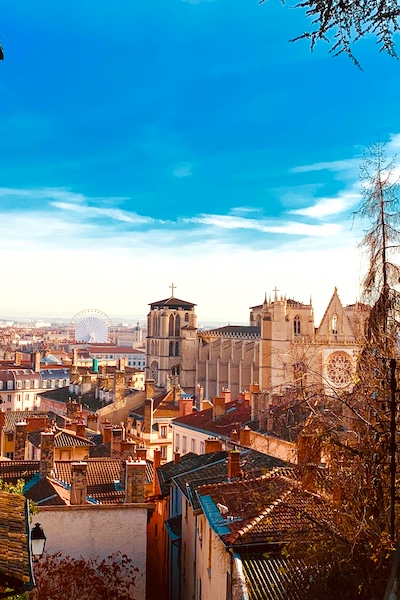
At 9:30 AM, take the funicular from Vieux Lyon station up to Fourvière Basilica (runs every 10 minutes, €1.90 with metro ticket). This saves you a steep 20-minute climb. The basilica, completed in 1896, dominates Lyon’s skyline with its white stone and four towers. Inside, marvel at the ornate mosaics depicting French religious history. Don’t miss the crypt below, equally decorated.
The real treasure is the esplanade behind the basilica, offering panoramic views over Lyon—the Saône and Rhône rivers, the red rooftops of Vieux Lyon, and on clear days, Mont Blanc in the distance. This is your best photo opportunity.
Adjacent to the basilica are the Roman Theatres of Fourvière, dating to 15 BC. The site includes a large theatre seating 10,000 and a smaller odeon. Entrance is free, and you can walk among the ancient stones. The on-site Gallo-Roman Museum is excellent but time-consuming; skip it if you’re on a tight schedule, or spend 30 minutes on the highlights.
Lunch
Descend from Fourvière around 11:30 AM and head to a traditional bouchon for an authentic Lyonnaise lunch. These family-run establishments serve hearty, no-nonsense cuisine in a convivial atmosphere with checkered tablecloths and wooden benches.
Book ahead if possible, as popular bouchons fill quickly. Recommended options include Chez Paul (11 Rue Major Martin), Daniel et Denise (36 Rue Tramassac), or Le Bouchon des Filles (20 Rue Sergent Blandan) for a female-run take on tradition. Expect to pay €20-30 for a full menu.
Start with a salade lyonnaise—frisée lettuce with lardons, a poached egg, and croutons. For mains, try quenelles de brochet (pike dumplings in cream sauce), tablier de sapeur (breaded tripe), andouillette (sausage), or boudin noir (blood sausage). If you’re squeamish about offal, opt for the safer saucisson chaud (warm sausage) with potatoes. Vegetarians will struggle in traditional bouchons—your best bet is a large salad or omelette.
Pair your meal with a pot lyonnais, a small bottle (46cl) of Beaujolais or Côtes du Rhône wine served in the traditional thick-bottomed bottle. Finish with a Saint-Genix (pink brioche with pralines) or tarte aux pralines, Lyon’s signature dessert—a bright pink tart with a crunchy, sweet filling.
Service can be brusque but efficient; this is part of the bouchon experience. Meals typically last 60-90 minutes. The atmosphere is lively and communal—you might share tables with locals and tourists alike.
If bouchons don’t appeal, the covered market Les Halles de Lyon Paul Bocuse (102 Cours Lafayette) offers gourmet alternatives—oysters, cheeses, charcuterie, and prepared foods. It’s pricier but allows you to sample multiple specialties. The market closes at 2:30 PM on weekdays and 3 PM on weekends, so arrive before 1 PM to enjoy it properly.
Afternoon
After lunch, walk to Presqu’île, the peninsula between the Saône and Rhône rivers, which forms Lyon’s commercial heart. Start at Place Bellecour, one of Europe’s largest open squares, dominated by an equestrian statue of Louis XIV. The square itself is fairly plain but serves as an excellent orientation point and hosts occasional markets and events.
From Bellecour, head north up Rue de la République, Lyon’s main shopping street with high-street brands and department stores. After 10 minutes, you’ll reach Place des Terreaux, an elegant square anchored by the Hôtel de Ville (City Hall) and the Palais Saint-Pierre, which houses the Musée des Beaux-Arts.
If you appreciate art, allocate 60-90 minutes for the Musée des Beaux-Arts (20 Place des Terreaux, €8, closed Tuesdays). It’s France’s finest fine arts museum outside Paris, with works by Rembrandt, Rubens, Monet, and Picasso, plus an excellent antiquities collection. The central courtyard garden offers a peaceful respite.
In the center of Place des Terreaux stands the Bartholdi Fountain (1892), depicting four horses pulling a chariot representing rivers flowing to the sea. At night, it’s beautifully illuminated.
Walk northeast into the Croix-Rousse district, historically Lyon’s silk-weaving quarter. The neighborhood sits on a steep hill—you can take the Croix-Rousse funicular from Place Colbert or walk up Montée de la Grande Côte, a charming street with independent shops, cafés, and street art.
Croix-Rousse retains a village atmosphere with markets (daily except Mondays at Boulevard de la Croix-Rousse), artists’ studios, and the famous Mur des Canuts, a massive trompe-l’œil mural depicting neighborhood life. The wall is at the corner of Boulevard des Canuts and Rue Denfert-Rochereau—a quick photo stop.
If time permits, visit the Maison des Canuts (10-12 Rue d’Ivry, €7.50), a small museum explaining Lyon’s silk industry with demonstrations of working looms. Tours last 45 minutes and help you understand why Lyon became Europe’s silk capital.
Evening
As the day winds down around 6:00 PM, head to the Confluence district at the southern tip of the Presqu’île where the Saône and Rhône rivers merge. This former industrial area has been transformed into an ultra-modern district with striking contemporary architecture.
The centerpiece is the Musée des Confluences (€9, closed Mondays), a stunning deconstructivist building of glass and steel that seems to float above the water. Inside, exhibitions cover natural history, anthropology, and sciences—interesting but not essential if you’re short on time. The architecture and waterfront setting are the real attractions.
Walk along the riverbanks and enjoy the contrast between old Lyon visible upstream and the futuristic buildings here. The pedestrian paths offer beautiful views, especially as the sun sets and lights begin reflecting off the water.
Alternatively, spend your evening along the Saône riverbanks in Vieux Lyon. The Quais de Saône come alive at sunset with street performers, book vendors, and people strolling or picnicking. Find a spot on the stone steps facing the river for a peaceful moment watching the light change on Fourvière hill.
During summer months, the Berges du Rhône on the east bank become a social hub with temporary bars, ping-pong tables, and lounge chairs. It’s where locals unwind after work—join them for an apéro (pre-dinner drink) at one of the pop-up terraces.
Dinner
For dinner around 8:00 PM, you have several excellent options depending on your afternoon location and energy levels. If you’re in Confluence, stay in the area and try Le Comptoir du Bœuf for quality meat dishes, or head back north toward Presqu’île for more choices.
For a refined dining experience, book Les Apothicaires (23 Rue de Condé, Presqu’île), a small restaurant offering inventive French cuisine with seasonal menus at reasonable prices (€30-40). The intimate setting requires advance reservations.
If you didn’t lunch at a bouchon, evening is your last chance to experience one. Try Café des Fédérations (8-10 Rue du Major Martin) or Le Garet (7 Rue du Garet), both institutions serving traditional fare in bustling, authentic atmospheres. Evening service tends to be busier and more touristy than lunch.
For something contemporary, the Saint-Jean neighborhood in Vieux Lyon now hosts modern bistros alongside traditional spots. Le Kitchen Café (34 Rue du Bœuf) offers creative French-fusion cuisine in a relaxed setting with outdoor seating overlooking cobblestone streets.
Food lovers should consider Restaurant Jérémy Galvan (29 Rue du Rempart d’Ainay), a Michelin-starred gem serving exceptional tasting menus (€55-85). The presentation is artistic, the flavors sophisticated, and the service impeccable—book well ahead.
For a casual finale, grab ice cream at Terre Adélice (3 Place Bellecour or multiple locations), a local chain with inventive flavors including praline rose, a Lyon specialty. Stroll through the illuminated streets of Vieux Lyon or along the Saône—the city takes on a magical quality at night when monuments are lit and crowds thin.
End your evening at a wine bar like Le Comptoir du Vin (5 Place Gailleton) to sample regional wines from Beaujolais, Côtes du Rhône, or Burgundy, reflecting on a full day in France’s gastronomic capital.
Where to Stay for One Day in Lyon
If you’re extending your visit overnight, these three exceptional hotels offer comfort and convenience:
Villa Florentine
Perched on Fourvière Hill, this 5-star Renaissance convent offers breathtaking city views, a Michelin-starred restaurant, and luxurious rooms. Perfect for a romantic getaway with easy access to major attractions.
Cour des Loges
Located in Vieux Lyon, this unique boutique hotel blends four Renaissance buildings with contemporary design. Features include a stunning glass-roofed courtyard, spa, and exceptional service in the heart of the historic district.
Hôtel Le Royal Lyon
Situated near Place Bellecour, this elegant hotel combines classic French style with modern amenities. Its central location makes exploring both sides of the Saône effortless, with excellent breakfast options and comfortable, well-appointed rooms.

This article reflects the personal opinion of the journalist who wrote it. The rating given is subjective and is solely that of the author.