One Day In Rome
Seeing everything in Rome in one day is impossible, but with proper planning, you can experience the city’s essence – iconic landmarks, authentic cuisine, and stunning views – in just 24 hours.

Recently updated on October 22nd, 2025 à 09:49 pm
Can You Explore Everything in Rome in One Day?
Right, let’s be honest here, mate – seeing everything in Rome in one day? That’s absolutely barmy. The Eternal City has over 2,500 years of history crammed into every cobblestone. But here’s the thing: with proper planning and a cheeky bit of strategy, you can experience the absolute essence of Rome in 24 hours. I’ve done it myself, and blimey, it was brilliant! You’ll hit the iconic spots, savour proper Roman cuisine, and still catch that magical golden hour over the Tiber. It’s knackering but utterly worth it.
Table of Contents
About This Itinerary for One Day in Rome
This carefully crafted itinerary focuses on Rome’s most iconic landmarks and experiences, strategically grouped to minimize travel time between sites. We’ve designed this route to help you experience the essence of the Eternal City without feeling rushed or overwhelmed.
The itinerary begins at the Colosseum and Roman Forum in the morning when crowds are lighter, moves through the historic center for lunch and afternoon exploration of the Trevi Fountain and Pantheon, then concludes with an evening visit to Vatican City and the enchanting Trastevere neighborhood for dinner.
Walking is the primary mode of transport, with most attractions located within a comfortable distance of each other. We recommend starting early (around 8:00 AM) to maximize your time and booking skip-the-line tickets in advance for major attractions. This itinerary balances must-see monuments with authentic Roman atmosphere, ensuring you capture both the grandeur and charm of this magnificent city.
One Day in Rome: Itinerary – In a Nutshell
If you only have 24 hours in the Eternal City, you need to maximize every moment. This carefully crafted itinerary hits Rome’s most iconic landmarks while leaving room to soak in the city’s incomparable atmosphere. Here’s your day at a glance:
Morning: Start early at the Colosseum (8:30 AM) to beat the crowds at Rome’s most famous monument. Follow this with a walk through the Roman Forum and up to Palatine Hill for sweeping views over the ancient ruins. This gives you a concentrated dose of ancient Rome before the midday heat sets in.
Lunch: Head to the charming Trastevere neighborhood around 12:30 PM for an authentic Roman lunch at a traditional trattoria. This working-class district offers genuine local cuisine away from the tourist traps near major monuments.
Afternoon: After lunch, make your way to Vatican City. Spend the afternoon exploring the Vatican Museums and Sistine Chapel (pre-book tickets!), then visit St. Peter’s Basilica. If time permits, climb the dome for spectacular panoramic views of Rome.
Evening: As the sun begins to set, stroll to the Trevi Fountain to toss your coin and guarantee a return to Rome. From there, walk to the Pantheon and then settle into Piazza Navona to watch street performers as twilight descends over the city.
Dinner: End your Roman adventure with dinner in the atmospheric streets near Campo de’ Fiori or the Jewish Ghetto, savoring classic dishes like cacio e pepe or carbonara while reflecting on an unforgettable day in one of the world’s greatest cities.
Here are some recommendations for activities with a guide, lasting a few hours that you can explore in Rome.
One Day in Rome: Itinerary – In Detail
Morning
Start at 7:30 AM at the Colosseum before crowds arrive. Book skip-the-line tickets online for 9 AM entry—this saves 1-2 hours of waiting. Spend 60-75 minutes exploring the arena floor, underground chambers, and upper tiers where you’ll grasp the scale of ancient Roman entertainment.
Exit through the Forum entrance at 10:15 AM. The Roman Forum and Palatine Hill share the same ticket as the Colosseum. Walk the Via Sacra, the main street where triumphal processions once paraded. Key stops include the Temple of Saturn, the Arch of Titus, and the House of the Vestal Virgins. Climb Palatine Hill for panoramic views over the Forum—emperors built their palaces here, and you’ll understand why when you see the vantage point.
Allocate 90 minutes for the Forum and Palatine Hill combined. The ruins require imagination, but information panels help reconstruct what stood here 2,000 years ago. By 11:45 AM, exit near the Campidoglio and walk 15 minutes to Piazza Navona.
Piazza Navona occupies the footprint of an ancient stadium. Three fountains punctuate the oval plaza, with Bernini’s Fountain of the Four Rivers as the centerpiece. This is photo opportunity central, but watch for pickpockets in the crowds. Grab a quick espresso at Café Domiziano if needed, but save your appetite for lunch.
From Piazza Navona, it’s a 5-minute walk to the Pantheon. This 2,000-year-old temple features the world’s largest unreinforced concrete dome, with an oculus open to the sky. Entry is free but expect security lines. The interior takes 15-20 minutes to appreciate—notice how light moves across the coffered ceiling throughout the day. Raphael’s tomb sits in one of the side chapels.
By 12:45 PM, you’re perfectly positioned in the historic center for lunch, having covered Rome’s most significant ancient monuments in one efficient morning loop.
Lunch
Head to Armando al Pantheon, a family-run trattoria 2 minutes from the Pantheon at Salita de’ Crescenzi 31. Arrive by 1 PM to snag a table without reservations, though booking ahead guarantees seating. This no-frills spot serves Roman classics without tourist markups.
Order cacio e pepe or carbonara—both signature Roman pasta dishes that Armando’s has perfected over 50 years. Cacio e pepe contains only three ingredients (pecorino cheese, black pepper, pasta water) but achieving the creamy consistency requires technique. Carbonara uses guanciale (cured pork jowl), eggs, and pecorino—no cream despite what restaurants elsewhere claim. Portion sizes are generous; one pasta per person suffices.
If Armando’s is full, walk 3 minutes to Enoteca Corsi on Via dei Gesù 87. This casual wine bar serves home-style Roman cooking at lunch only. They handwrite the daily menu on a chalkboard—point at what looks good. The atmosphere feels local rather than touristy, with businesspeople and neighborhood regulars filling the simple wooden tables.
For faster options near the Pantheon, grab supplì (fried rice balls with mozzarella) and pizza al taglio (pizza by the slice) at Supplizio on Via dei Banchi Vecchi. Two supplì and a slice make a filling lunch you can eat while walking. Save 30 minutes this way if you’re behind schedule.
Drink tap water (“acqua del rubinetto”) to save €3-4 per bottle—Rome’s water is excellent. Skip appetizers and dessert at lunch to save time and stomach space for dinner. A typical lunch here costs €12-18 per person including house wine.
Budget 60 minutes total for a sit-down lunch, 20 minutes for takeaway. By 2 PM, you should be ready to walk toward Vatican City, roughly 20 minutes northwest along the Tiber River or a quick taxi ride if your feet need relief.
Afternoon
Arrive at Vatican Museums by 2:30 PM with pre-booked tickets—essential to avoid 2-3 hour entry queues. The museums close at 6 PM (last entry 4 PM), giving you adequate time if you move purposefully. The complex contains 54 galleries spanning 7 kilometers; seeing everything is impossible, so prioritize strategically.
Follow signs directly to the Sistine Chapel first—reverse the typical flow to see Michelangelo’s ceiling and Last Judgment before fatigue sets in. Spend 20-25 minutes here; guards enforce silence, and photography is prohibited though tourists ignore this constantly. The restored colors are surprisingly vibrant—look for the famous Creation of Adam panel at the center of the ceiling.
Backtrack to the Raphael Rooms (Stanze di Raffaello), four chambers decorated with Renaissance frescoes. The School of Athens in the Room of the Segnatura depicts history’s greatest philosophers in an architectural setting. Allocate 20 minutes across all four rooms.
Walk through the Gallery of Maps, a 120-meter corridor with topographical maps of Italian regions painted in 1580. The Gallery of Tapestries and Gallery of Candelabra lead here—move through these relatively quickly unless something catches your eye. Together, these galleries take 25 minutes at a steady pace.
The Pinacoteca (picture gallery) houses Caravaggio’s Deposition and Raphael’s Transfiguration if you have extra time, but skip it if you’re running late. Exit the museums by 4:30 PM.
St. Peter’s Basilica sits adjacent to the museums. Security screening takes 15-30 minutes depending on crowds. Inside, see Michelangelo’s Pietà (protected behind glass since a 1972 attack), Bernini’s bronze baldachin over the papal altar, and the elaborate dome designed by Michelangelo. Entry is free. The basilica closes at 7 PM, giving you 90 minutes to explore.
Climbing the dome costs €10 (€8 if you take stairs the entire way). The 551 steps are strenuous but the panorama over Rome justifies the effort. Skip this if mobility is limited or time is tight. By 6 PM, exit into St. Peter’s Square to admire Bernini’s colonnade before heading toward Trastevere for the evening.
Evening
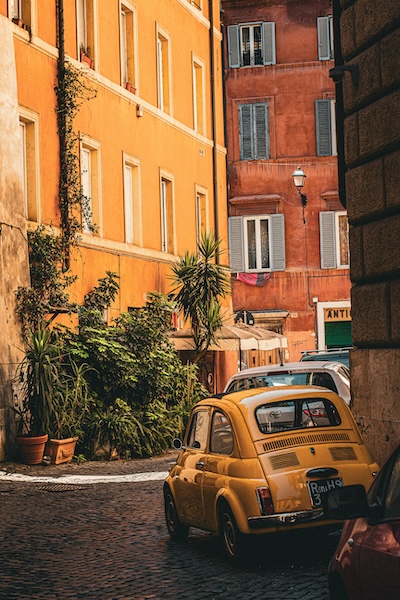
Cross the Tiber River into Trastevere, Rome’s bohemian neighborhood with medieval cobblestone streets. Arrive around 6:30 PM when golden hour light illuminates ochre buildings and laundry strung between windows. This is wandering time—no monuments to tick off, just atmospheric streets and local energy.
Start at Piazza Santa Maria in Trastevere, where the 12th-century basilica features glittering mosaics on its facade. Romans gather on the fountain steps with Peroni beers and conversation as evening begins. The church interior contains Byzantine-style mosaics worth 10 minutes if it’s open.
Wander Via della Lungara toward Villa Farnesina, or explore the narrow lanes around Via della Pelliccia where ivy cascades from balconies. Trastevere has minimal car traffic, making it pedestrian-friendly and relaxed after the Vatican’s intensity.
Stop at a wine bar for aperitivo, the Italian pre-dinner ritual. Freni e Frizioni on Via del Politeama offers €8-10 cocktails with complimentary buffet snacks from 6-10 PM. Ombre Rosse on Piazza Sant’Egidio provides outdoor seating and a simpler vibe. Order an Aperol spritz or Negroni—both quintessentially Italian aperitifs.
Alternatively, climb Gianicolo Hill (15 minutes uphill from Trastevere) for sunset views over Rome’s domes and rooftops. The terrace near the Fontanone water monument provides the city’s best non-touristy viewpoint. By 8 PM, return downhill into Trastevere’s restaurant zone for dinner—Romans eat late, so reservations for 8:30-9 PM align with local customs.
Dinner
Book dinner at Flavio al Velavevodetto in Testaccio, Rome’s traditional working-class neighborhood. Take a 10-minute taxi from Trastevere. Testaccio locals pack this trattoria for authentic Roman cuisine without pretense. Reservations are essential; call ahead or book through TheFork app.
Start with carciofi alla giudia (Jewish-style fried artichokes) if in season (November-April), or supplì as an appetizer. For primi, order rigatoni con la pajata (pasta with veal intestine sauce—more delicious than it sounds) or amatriciana with guanciale and tomato. Secondi include coda alla vaccinara (oxtail stew) or saltimbocca (veal with prosciutto and sage).
Portions are substantial—consider sharing dishes. House wine (vino della casa) is inexpensive and perfectly adequate. Expect to spend €25-35 per person including wine and cover charge. The atmosphere is loud, convivial, and unpretentious—exactly what Roman dining should feel like.
If Flavio is fully booked, try Da Enzo al 29 in Trastevere (reserve days ahead) or Checchino dal 1887 in Testaccio for upscale traditional cuisine. For quicker options, Trapizzino near Testaccio market serves pizza pockets stuffed with Roman specialties—two trapizzini make a casual dinner for under €10.
End with gelato at Fatamorgana (Via Roma Libera 11) in Testaccio. They make inventive flavors using natural ingredients—try pistachio, fig-walnut, or sesame. Proper gelato should have muted colors, not day-glo brightness that signals artificial ingredients.
Finish around 10:30 PM. If energy remains, taxi to Trevi Fountain (€8-10 from Testaccio). The illuminated fountain with minimal crowds makes a romantic final stop. Toss a coin over your left shoulder to ensure returning to Rome—the tradition has worked for millions. By 11:30 PM, your condensed Roman experience concludes, exhausting but comprehensive.
Where to Stay for One Day in Rome
If you’re planning an overnight stay to maximize your Rome experience, these three centrally-located hotels offer comfort and convenience:
Hotel Artemide
A four-star gem near Termini Station, combining elegant Art Nouveau design with modern amenities. Perfect for early morning departures and easy access to major attractions.
Hotel Campo de’ Fiori
Nestled in the heart of Rome’s historic center, this boutique hotel puts you steps away from piazzas, restaurants, and monuments. Rooftop terrace offers stunning city views.
The Fifteen Keys Hotel
Located near the Spanish Steps, this luxury boutique property features individually designed rooms and impeccable service. Ideal for travelers seeking refined accommodations within walking distance of Rome’s highlights.

This article reflects the personal opinion of the journalist who wrote it. The rating given is subjective and is solely that of the author.